Stand under the strip lights of a damp, draughty garage on a Tuesday morning, and you will smell it before you see it. The faint, sweet tang of hot coolant mixing with the dry, slightly acrid scent of curing rubber. The rhythmic ticking of a cooling exhaust pipe echoes softly against the brickwork, setting the tempo for an expensive conversation.
You stare down at a faded yellow service sticker clinging stubbornly to the inside of your bonnet. It dictates a hard deadline, a looming 60,000-mile threat that promises catastrophic engine failure, shattered valves, and thousands of pounds in repairs if you dare to ignore it.
But engines do not wear watches, and rubber does not consult a calendar. The rigid interval printed in your owner’s handbook is a protective average, engineered largely to shield the manufacturer from warranty liability rather than reflect the true physical state of the components spinning inside your engine bay.
The reality is far more nuanced and considerably more empowering. Your timing belt tells a physical story, one written in microscopic stress fractures, the temper of the rubber, and the subtle lateral movement of spring-loaded tensioners.
Reading the Rubber, Not the Clock
Think of it like assessing the health of a garden during a drought. You would not water your plants blindly just because a piece of paper told you it was a Tuesday; you would press your fingers into the soil to feel for moisture, responding to the actual condition of the earth.
Applying this same logic to your timing belt maintenance shifts you away from blind panic and towards informed observation. The age-old anxiety of crossing the 60,000-mile threshold suddenly vanishes when you understand what the material is actually doing as it snakes around the camshaft pulleys.
This is the heart of true longevity planning. Rather than replacing a perfectly healthy belt simply because the odometer rolled over a specific number, the real secret to reaching 200,000 miles is knowing precisely where the mechanical weak points hide and letting the physical evidence guide your wallet.
Arthur, a 58-year-old independent specialist working out of a converted brick shed near Leeds, knows this better than anyone. He has spent three decades listening to the distinct hum of four-cylinder engines, smelling the oil, and feeling the vibration of countless timing systems.
When a car rolls into his bay with exactly 60,000 miles on the clock, Arthur ignores the dashboard entirely. Instead, he unclips the plastic upper timing cover, shines a pencil torch down into the dark chasm of the engine block, and runs his bare thumb over the flat side of the belt.
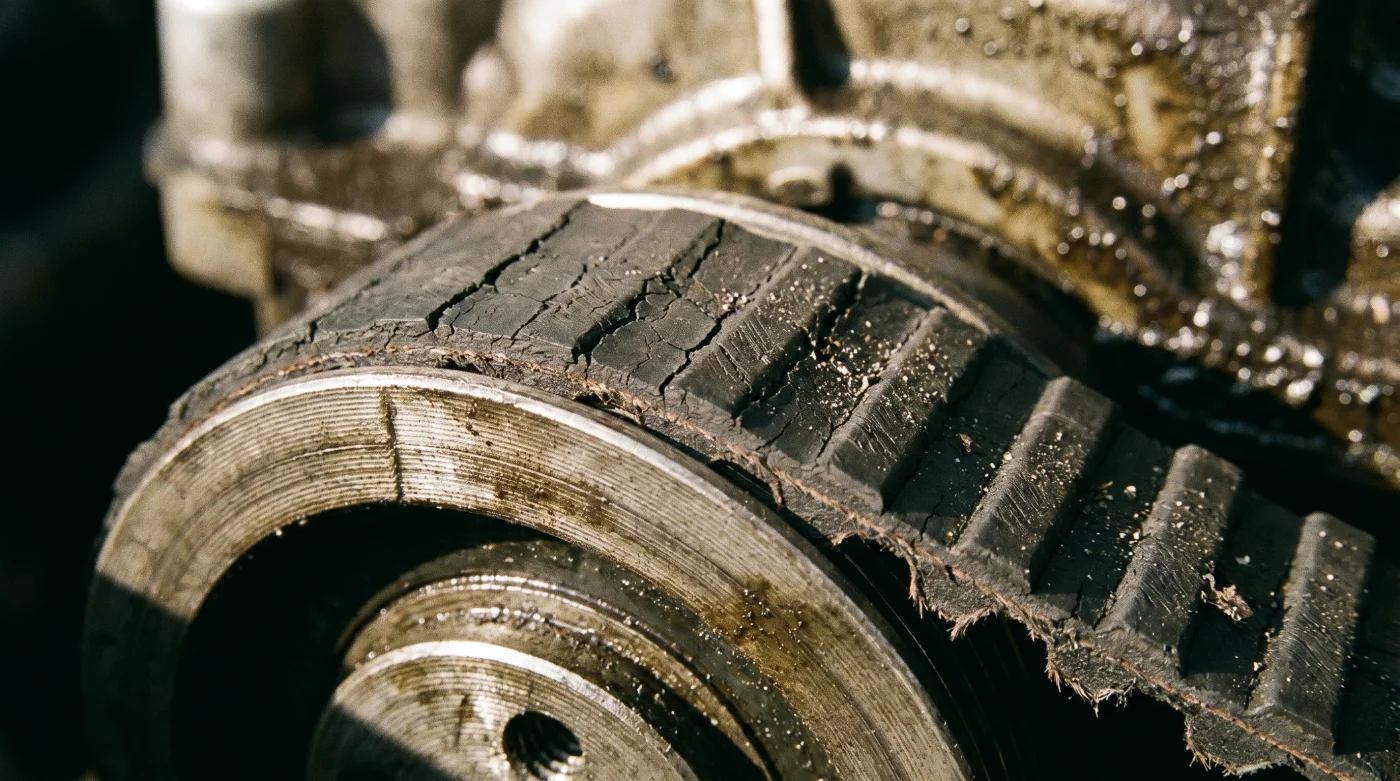
He is feeling for the subtle glossy glazing that indicates severe heat damage, a symptom far more deadly than mere chronological age. Arthur says the belt itself rarely snaps without warning; it is the tensioners and idler pulleys that surrender first, throwing the rubber out of alignment and causing the ultimate failure.
Arthur explains that the rubber compound is designed to flex millions of times, but it is the surrounding environment—the heat cycles, the dust, the tension—that dictates whether it will last forty thousand miles or one hundred thousand.
Not all miles are created entirely equal in the eyes of a mechanic. How you drive dictates the tension and heat your engine endures, meaning a strict numeric rule is inherently flawed from the moment the car leaves the forecourt.
Mapping Your Specific Wear Profile
If you are a relentless stop-start city driver, spending hours idling in traffic queues on the North Circular, your engine operates at consistently high temperatures with very low airflow. This bakes the rubber, accelerating degradation long before you hit the printed mileage mark.
Conversely, the motorway commuter creates an entirely different stress pattern altogether. Cruising at a steady seventy miles per hour in top gear puts an incredibly consistent, low-stress tension on the belt, allowing the engine bay to breathe and cool effectively.
For these high-mileage drivers, the rubber often remains supple and free of visual stress marks well past 80,000 or even 90,000 miles. Replacing it purely on the 60,000-mile mark is akin to throwing away a perfectly good pair of walking boots just because you have owned them for a year.
The garage-kept Sunday driver faces a third hidden threat in the form of dry rot. Rubber needs regular movement and heat cycles to remain supple, and a car parked for weeks at a time slowly turns a fresh timing belt brittle, regardless of how few miles it has covered.
The Tactile Toolkit
You do not need to be a seasoned professional to understand what is happening beneath that black plastic casing. A few mindful observations will tell you exactly when the rubber has actually reached the end of its natural, safe lifespan.
Requesting a physical tensioner play check rather than blindly approving a replacement quote could save you upwards of five hundred pounds. When your car is on the ramp for its annual service, ask your mechanic to perform these specific tactile checks.
- Check the base of the belt teeth for microscopic cracking, mimicking dry, chapped skin that indicates a loss of elasticity.
- Press the back of the belt to feel for a stiff, plasticky texture instead of yielding, healthy rubber.
- Examine the tensioner pulley for any lateral wobble or a faint metallic whining noise when the engine is idling.
- Look closely for any signs of oil seepage from the camshaft seals, as synthetic oil degrades rubber in a matter of days.
Stepping away from the rigid numerical rules requires a quiet confidence. It means trusting physical evidence, tactile feedback, and professional observation over printed averages designed for the masses.
By learning to read the visual stress of your engine components, you stop bleeding money on premature preventative maintenance. You begin treating your car as a living, breathing mechanical system rather than a ticking countdown clock waiting to catch you out.
The next time the local garage calls to warn you about an impending mileage deadline, pause for a moment. Ask them what the rubber actually looks like, how the tensioner feels, and whether the belt tells a story of exhaustion or one of enduring strength.
It forces a shift from fear to informed control. When you know what actually causes an engine to fail, you can drive past the 60,000-mile mark with the radio on, listening only to the steady, rhythmic hum of a healthy engine pulling you forward.
A printed service schedule is a corporate guess; a glazed belt and a wobbly tensioner are a mechanical guarantee. Look at the rubber, not the paper.
| Symptom | Detail | Added Value for the Reader |
|---|---|---|
| Glossy Backing | The flat side of the belt reflects light like hard plastic instead of matte rubber. | Saves you from ignoring silent, progressive heat damage. |
| Chapped Teeth | Micro-fissures appearing at the base of the rubber cogs. | Tells you exactly when the material has lost its vital elasticity. |
| Tensioner Whine | A faint metallic whistling noise when the engine is idling. | Identifies the true mechanical culprit before the belt actually snaps. |
Is it dangerous to go past 60,000 miles? Not inherently, provided the belt and tensioners are physically inspected by a professional and show absolutely no signs of fatigue, cracking, or heat glazing.
How much does an inspection cost compared to a change? A visual and tactile inspection usually costs half an hour of labour, whereas a full belt and water pump change can easily run well over five hundred pounds.
Can I check the condition of the belt myself? If your car has a removable upper plastic cover, you can unclip it and inspect the top section with a strong torch, though checking tensioner play strictly requires a mechanic’s expertise.
Does chronological age matter more than the mileage? Yes, particularly if the car sits idle. Rubber perishes naturally after seven to ten years regardless of how incredibly few miles the car has actually been driven.
Will ignoring the interval void my warranty? If your car is still under a strict manufacturer warranty, you must follow the printed schedule. This condition-based approach is exclusively for older vehicles entering their high-mileage years.