You stand in the biting drizzle of a November morning, staring at the scarred tarmac of a typical high street garage. The metallic clack of an impact wrench echoes from the bay, while the smell of hot rubber and industrial floor cleaner hangs heavy in the damp air. You came in because the tread on your electric family car has worn down to the legal limit, and the lad behind the counter is typing your registration into his terminal with the slow, deliberate strokes of a man about to deliver bad news.
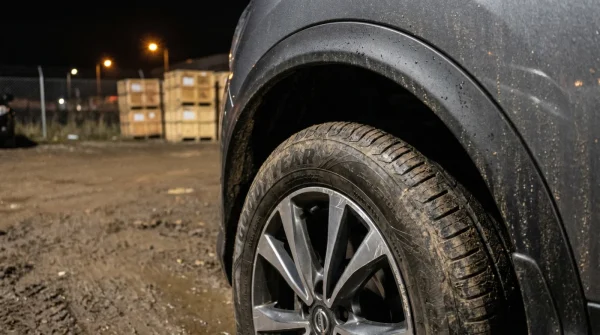
When he finally turns the screen around, the figure stings. Over a thousand pounds for a set of four replacements. He points to the little ‘EV’ logo embossed on the sidewall depicted on the screen, nodding knowingly. He explains that your car is incredibly heavy, that the battery requires special compounds to handle the instant torque, and that fitting anything else would be a reckless compromise of your family’s safety.
It feels logical at first glance. You bought into the electric vehicle revolution, and it stands to reason that modern technology demands modern, specialised maintenance. But as you sip the lukewarm, dusty tea from the waiting room machine, a quiet suspicion starts to gnaw at you. Is the rubber genuinely different, or are you simply paying a luxury tax for three little letters moulded into the sidewall? The truth hiding in the stockroom is far less glamorous than the glossy marketing brochures suggest.
The Heavy Shoe Illusion
Think of your car’s rubber like a pair of sturdy walking boots. If you suddenly start carrying a heavy rucksack on a hike, you do not need boots made from a magical, newly invented material spun in a laboratory. You simply need a boot with a stiffer sole and a reinforced ankle structure. The exact same physics apply to your electric hatchback or estate.
The motor trade has heavily invested in convincing you that a two-tonne electric vehicle requires an entirely new species of tyre. This is an expensive fiction. The reality of automotive engineering is that tyres are strictly rated by load capacity and speed tolerance. A high-quality premium tyre designed for a heavy diesel estate car possesses the exact structural integrity needed to safely cradle your battery pack.
The ‘EV’ sticker on a premium tyre often represents nothing more than a minor tweak to the tread pattern to marginally reduce road noise, coupled with a thin layer of acoustic foam glued to the inner lining. You are effectively paying a forty percent premium for a strip of ordinary sponge and a highly effective marketing campaign.
Consider the case of Martin Hughes, a 52-year-old fleet manager from Leeds who oversees two hundred electric company cars, ranging from humble hatchbacks to heavy luxury saloons. Last year, facing a spiralling maintenance budget that threatened his department’s viability, Martin ran a quiet experiment. Defying the loud protests of his local supplier, he swapped the worn ‘EV-approved’ rubber on half his fleet for standard premium tyres with an identical ‘Extra Load’ (XL) rating. After half a million combined miles of motorway pounding, severe pothole strikes, and greasy wet roundabouts, the data was undeniable. The standard premium tyres wore at exactly the same rate, offered identical wet-weather stopping distances, and saved the company thousands across the quarter. The drivers themselves noticed absolutely zero difference in handling or comfort.
Tailoring the Tread to Your Drive
Not all drivers interact with their cars in the identical way. The current industry insistence on a universal, hyper-expensive EV tyre deliberately ignores how you actually use your vehicle on a daily basis.
For the Motorway Commuter: If your life is spent cruising the M1 or M6 at seventy miles per hour, your primary enemy is gradual wear, not sudden torque delivery. A standard premium touring tyre with a high treadwear rating will serve you flawlessly. The acoustic foam found in EV variants might reduce cabin noise by a single decibel at those speeds, a difference completely masked by the wind rushing past your wing mirrors anyway.
For the Urban Parent: Navigating chaotic school runs and tight supermarket car parks means endless low-speed turns and scrubbing the sidewalls against granite kerbs. You need tough, unyielding edges. Look for XL-rated rubber, regardless of whether it features an EV badge. The extra load rating prevents the tyre from deforming dangerously under the sheer weight of the battery during tight, abrasive manoeuvres.
For the Rural Explorer: If you live down a rutted lane in Somerset or the Scottish Borders, you need mechanical grip in wet leaves and deep mud. EV-specific tyres are frequently engineered to possess unusually low rolling resistance, prioritising dashboard battery range over outright grip. A high-quality all-season tyre, standard but sturdy, will keep you far safer on a dark November evening when the rain turns to sleet.
The Tactician’s Guide to Buying Rubber
Escaping the premium markup requires a fundamental shift in how you read a tyre sidewall. You must stop looking for comforting marketing logos and start demanding hard engineering truths from your supplier.
When the fitter leans over the counter and suggests the most expensive, EV-branded option, politely ask for the exact load index and speed rating legally required by your vehicle’s manufacturer. Take control of the transaction by dictating the numbers rather than accepting the narrative.
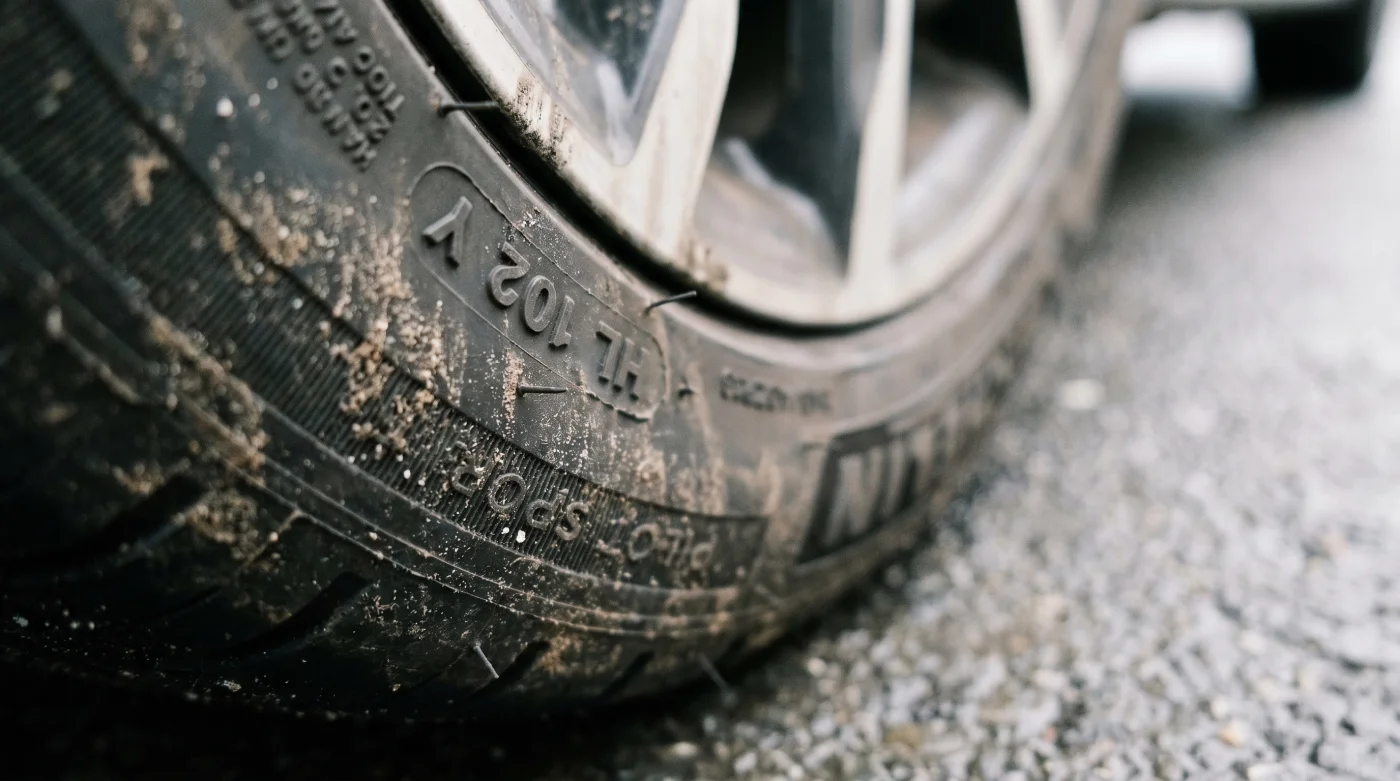
- Locate the load index on your current tyre, which is a two or three-digit number typically between 90 and 105, found just after the width and profile dimensions.
- Identify the speed rating, usually a single letter like V, W, or Y, immediately following the load index number.
- Request specific quotes for standard premium tyres that match or exceed these exact two figures, ignoring the brand’s ‘electric’ ranges.
- Verify the EU tyre label for wet grip and fuel efficiency ratings, comparing the standard tyre directly against the EV version to prove to yourself how similar they are.
- Check the tyre pressure recommendations on your driver’s door shut, ensuring the new rubber is inflated perfectly to handle the vehicle’s specific kerb weight.
The Tactical Toolkit:
Keep a reliable tyre tread depth gauge in your glovebox to check your own wear before ever visiting the garage, robbing the fitter of the element of surprise. Keep a portable digital tyre inflator in the boot; maintaining exact pressures is vastly more crucial for electric vehicle range than the specific rubber compound itself. Finally, always consult your physical vehicle handbook, as it remains the ultimate legal and mechanical authority on load indices, instantly superseding any quick-fit mechanic’s personal opinion.
Regaining Control of Your Running Costs
British motoring has always been clouded by persistent myths and aggressive up-selling, and the rapid electric transition is simply writing a new chapter using the exact same playbook. By understanding the straightforward mechanical truth of what keeps your car safely glued to the tarmac, you strip away the technological fear that drives impulse spending.
You likely bought a modern car to enjoy a smoother, cleaner, and ultimately more economical way of moving through the world. Do not let manufactured anxiety drain the financial savings you were promised at the dealership. Every time you confidently request a standard, heavily rated premium tyre over a marked-up special edition, you are reclaiming a little bit of that original promise. It feels remarkably empowering to drive away from the garage knowing you have secured exactly what your car needs, keeping your hard-earned pounds out of the tyre industry’s aggressive marketing budget.
“The laws of physics do not change just because a car does not have an exhaust pipe; load and friction are universal, and any tyre built to structurally handle the weight will perform the job safely.”
| Key Point | Detail | Added Value for the Reader |
|---|---|---|
| The Load Rating | Focus on the ‘XL’ or numerical load index rather than the ‘EV’ stamp. | Guarantees safety and legal compliance without the markup. |
| Acoustic Foam | A thin strip of sponge glued inside EV tyres to mute resonance. | Saves you paying excessive fees per tyre for a barely noticeable noise reduction. |
| Rolling Resistance | EV tyres compromise some grip to gain a fraction of extra battery range. | Choosing standard premium rubber often yields better wet-weather safety. |
Crucial Clarifications
Will fitting non-EV tyres void my car warranty?
No. As long as the tyre meets the manufacturer’s specified size, load index, and speed rating, your warranty remains entirely intact.Do electric cars genuinely wear out tyres faster?
They can, due to the instant torque and heavy battery weight. Smooth, progressive acceleration mitigates this far more effectively than buying a marked-up tyre.Is the cabin noise noticeably louder without EV tyres?
At very low speeds, you might detect a faint hum. Above fifty miles per hour, wind noise completely drowns out any acoustic benefit the EV tyre provides.Are all-season tyres suitable for heavy electric vehicles?
Absolutely. Provided they have the correct XL load rating, they offer vastly superior mechanical grip in British winters compared to summer-biased EV rubber.How often should I check the pressures on standard tyres fitted to an EV?
Every two weeks. The sheer weight of the vehicle makes correct inflation critical for both safety and preventing premature shoulder wear.