The air in the garage holds that unmistakable, faintly sweet scent of hot coolant mixing with October damp. You rest your hand against the wing of your pristine hatchback, listening to the soft metallic ticking of an engine settling into silence. It is a comforting ritual.
For decades, buying a Volkswagen Golf has felt less like a purchase and more like an initiation into a club of quiet competence. You expect flawless German engineering, a machine that shrugs off motorway miles and B-road grit with equal indifference.
Yet, beneath that perfectly stamped bonnet, a slow betrayal is gathering moisture. It is a tiny, almost invisible seep that contradicts the badge on the grille and quietly shifts the balance of power to a much cheaper rival parked on the same driveway.
The Plastic Achilles Heel
Let us talk about the 1.5 TSI engine. It hums along with remarkable efficiency, delivering you across the country without breaking a sweat. But its weakness lies not in the pistons or the electronics, but in a component made of a material that has no business bearing such thermal stress.
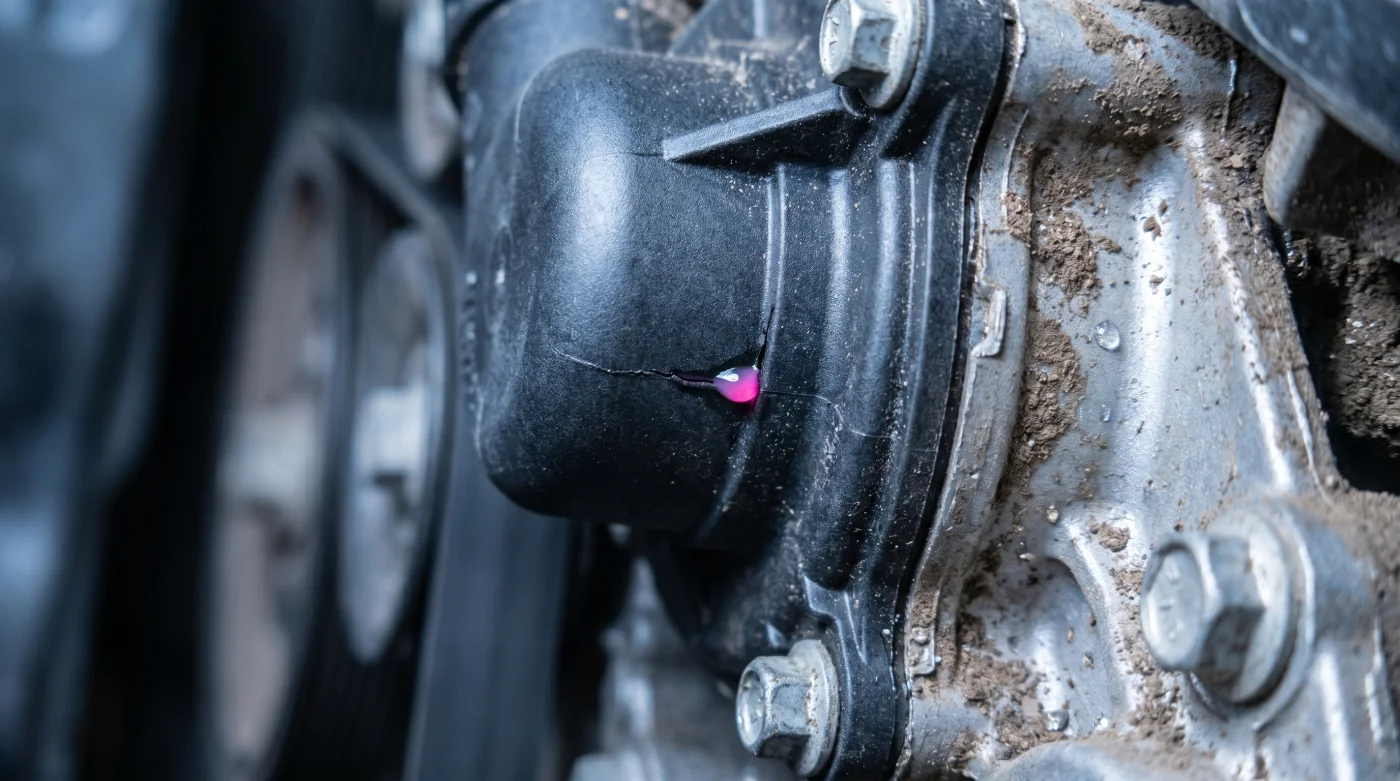
Think of the water pump housing as a fragile porcelain teacup tasked with holding a continuous, pressurised stream of boiling fluid. Over thousands of heat cycles, the plastic warps, creating micro-fissures. This is not a spectacular blowout; it is a silent leak that drains both your coolant reservoir and your wallet.
While you are topping up the header tank and convincing yourself it is just normal consumption, the cheaper alternative suddenly looks significantly smarter. The Golf’s premium price tag assumes perfection. When that perfection leaks onto the tarmac, the financial logic collapses.
Gareth, a 48-year-old independent mechanic who runs a busy workshop in Staffordshire, points to a cracked black plastic module sitting on his bench. ‘I do two every week,’ he sighs, wiping a mixture of oil and pink fluid from his hands. ‘People pay thousands extra for the VW badge, expecting armour-plated reliability. But this little plastic thermostat and pump housing just gives up. Meanwhile, a bloke in a cheaper Skoda with the same engine had the financial buffer to fix it, or the bloke in the Corolla completely dodged the bullet.’
Deep Segmentation: Who Suffers Most?
Not all drivers experience this slow demise at the same rate. How you use the car dictates how quickly the plastic fatigues, splitting owners into distinct camps of frustration.
For the motorway commuter, the issue is masked by constant airflow. You might only notice it when the dashboard chimes a low-coolant warning during a harsh winter morning, long after the pink crust has built up around the engine block.
- BREAKING: Urgent steering rack recall issued for current Honda Civic models
- The controversial grille change BMW is quietly reversing on the new 3 Series
- The EV tyre scam: Why you are paying a 40% premium for standard rubber
- The £5 cleaning mistake that permanently destroys your alloy wheels
- The 60,000-mile timing belt rule is a myth: What mechanics look for instead
- The hidden boot seam that reveals if a used Range Rover Evoque is a money pit
- Why buying the cheapest Ford Puma trim is the smartest decision you can make
For the city driver, the constant stop-start traffic and fluctuating temperatures act like a slow-motion hammer against the plastic housing. The heat soak after you park up cooks the component, accelerating the warping process dramatically.
For the used-car buyer, this is the hidden landmine. A freshly valeted three-year-old model sitting on a forecourt looks immaculate. If the dealer simply topped up the coolant without addressing the underlying replacement job, you are buying a ticking clock.
Mindful Application: Spotting the Seep
You do not need to be a master technician to spot this before it leaves you stranded. The signs are there if you know exactly where to shine your torch.
Approach the inspection with patience. Let the engine cool completely, perhaps leaving it overnight, before you start feeling around the belts and hoses near the inlet manifold.
Here is your tactical toolkit for spotting the water pump flaw before handing over your money:
- Shine a bright torch down the left side of the engine block, just below the inlet manifold.
- Look for a powdery, chalky pink residue—this is dried G12 evo coolant.
- Check the header tank level on a cold morning. If it sits below the MIN line, suspicion should immediately fall on the pump housing.
- Listen for a faint squeaking noise from the auxiliary belt area on cold startups, often caused by coolant dripping onto the rubber.
By catching it early, you transform a sudden breakdown on the hard shoulder into a scheduled, negotiated repair. You strip away the anxiety, replacing it with quiet control over your machine’s maintenance.
The Bigger Picture: Redefining Sensible Motoring
We cling to certain automotive truths because they make buying decisions much easier. The Golf has always been the default answer to the question of what sensible car to buy.
But true peace of mind does not come from a badge on a steering wheel. It comes from mechanical transparency. Recognising that even the most celebrated engineering has a plastic weakness allows you to step away from blind brand loyalty.
When you realise the cheaper rival offers either stronger components or the upfront financial buffer to absorb the inevitable repair, the hierarchy of the road shifts. You stop paying for an illusion of flawlessness and start paying for reality.
‘True reliability isn’t a car that never breaks; it’s a car whose weaknesses are known, predictable, and priced accordingly.’
| Key Point | Detail | Added Value for the Reader |
|---|---|---|
| The Premium Penalty | Golf buyers pay a premium for a badge, yet suffer the same 1.5 TSI plastic housing failure as cheaper VAG cousins. | Highlights the financial inefficiency of paying more for identical mechanical vulnerabilities. |
| The Cheaper Rival Advantage | Cars like the Skoda Scala cost significantly less used, providing a cash buffer for the £600-£800 pump replacement. | Empowers you to buy strategically, factoring known repairs into a lower purchase price. |
| The Visual Tell | Chalky pink G12 evo residue around the left side of the engine block underneath the manifold. | Gives you a direct, actionable inspection method to avoid buying a faulty vehicle. |
Frequently Asked Questions
Is the 1.5 TSI engine completely unreliable?
Not at all. The core engine is robust and highly efficient; the issue is strictly isolated to the thermal fatigue of the plastic water pump and thermostat housing.How much does it cost to fix the water pump leak in the UK?
At an independent specialist, expect to pay between £600 and £850, as the part is complex and requires significant labour to access.Will a new water pump just fail again?
Volkswagen has released revised parts over the years, but because the material is still plastic facing high heat cycles, it remains a consumable item rather than a lifetime part.Does this issue affect the cheaper Skoda and Seat models?
Yes, if they use the exact same 1.5 TSI powertrain. However, because their purchase price is lower, the financial sting of the repair is easier to swallow.Can I just keep topping up the coolant?
Only as an emergency measure. The micro-fissures will inevitably widen, leading to a sudden loss of coolant which can catastrophically overheat and warp the aluminium engine block.