Imagine driving down the M1 early on a Tuesday morning. The steady thrum of the tyres on the tarmac, the heater taking the chill off the cabin, a half-empty cup of tea resting in the central console. You bought this car because you wanted a silent partner in your daily routine. A vehicle so dependable it practically fades into the background.
But suddenly, the steering wheel grows impossibly heavy. It feels as though the front wheels have been cast in solid concrete. What was supposed to be a gentle curve near Watford Gap rapidly becomes an intense, terrifying wrestling match with two tonnes of moving metal.
This is the harsh reality currently facing thousands of owners. The emblem on the bonnet stands for decades of unbroken trust, an engineering philosophy that promised you would never have to worry. Yet, a severe manufacturing defect within the power steering assembly is actively contradicting that bulletproof reputation, causing sudden lock-ups at seventy miles per hour.
You are not just dealing with a minor inconvenience or a squeaky belt. You are looking at a fundamental breach of the contract you signed when you chose dependability over flair. The comforting illusion of invulnerability is shattered, forcing you to look under the surface of the machine you trust with your life.
The Anatomy of a Broken Promise
Think of modern electric power steering as a digital translator between your hands and the road. When everything works perfectly, it reads the subtle twitches of your wrists and amplifies them into smooth, sweeping mechanical movements. It is an invisible safety net, catching the strain so your arms do not have to.
But when that translator suddenly stops working, you are abruptly left holding the entire physical weight of the steering rack. The sudden lock-up is not actually a mechanical jam; it is the instantaneous loss of that vital assistance, leaving you fighting the dead weight of the front axle.
Curiously, this glaring vulnerability offers a profound advantage for the attentive driver. By understanding exactly how and why this electronic assistance fails, you stop being a passive passenger in your own car. You become acutely aware of the early warning signs, giving you the precious seconds needed to react before total failure.
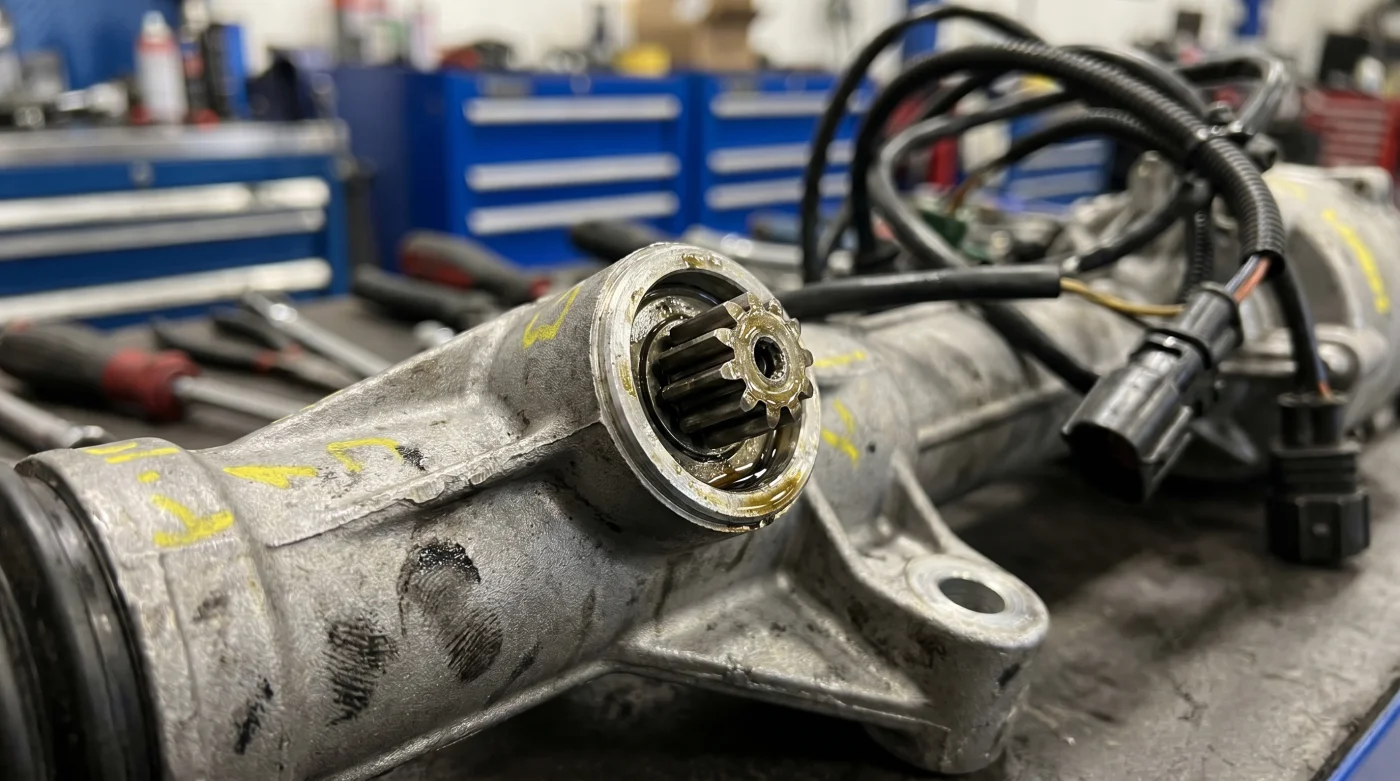
Consider the experience of Arthur Pendelton, a 54-year-old independent Honda specialist working out of a cramped, immaculately clean garage in West Sussex. Arthur has spent thirty years dismantling these specific models, and he noticed the anomaly weeks before the official recall dropped. ‘It starts as a faint, magnetic resistance,’ he noted while pointing to a disassembled steering column on his workbench. ‘People think they are just tired or hitting a rut in the tarmac, but it is the internal sensors failing to interpret the angle. The car simply stops listening to the driver.’
Assessing Your Risk Profile
Not every vehicle rolling off the production line shares the same immediate threat level. Your response to this defect must be dictated by how and where you spend your time behind the wheel.
- The controversial grille change BMW is quietly reversing on the new 3 Series
- The EV tyre scam: Why you are paying a 40% premium for standard rubber
- The £5 cleaning mistake that permanently destroys your alloy wheels
- The 60,000-mile timing belt rule is a myth: What mechanics look for instead
- The hidden boot seam that reveals if a used Range Rover Evoque is a money pit
- Why buying the cheapest Ford Puma trim is the smartest decision you can make
For the high-mileage motorway commuter, the risk is undeniably urgent. The combination of sustained high speeds and prolonged sensor heat creates the perfect storm for sudden assistance failure. You cannot afford to wait for a dealership letter; your priority is getting the diagnostic check immediately.
For the urban runabout, the danger takes a different shape. Navigating tight roundabouts and endless parallel parking puts immense rotational stress on the steering rack. While a failure at twenty miles per hour will not end in a catastrophic collision, it will leave you stranded in the middle of a busy junction, completely unable to wrestle the car to the kerb.
For the recent second-hand buyer, you face a unique bureaucratic hurdle. The manufacturer warning notices often go to the original registered keeper. You must actively chase the dealership, armed with your registration document, to ensure your newly acquired asset is logged into the system for the crucial fix.
The Mindful Application
Taking control of this situation requires a calm, systematic approach. Panic is your enemy, both on the road and in the service centre waiting room.
You must listen to the steering with deliberate focus. Turn the radio off during your next slow-speed manoeuvre and pay attention to the tactile feedback flowing into your palms.
If you feel a sudden heavy resistance or hear a grinding, electrical whine, pull over safely. Document the exact moment and conditions. Here is your tactical toolkit for handling the recall process without losing your composure:
- Check your vehicle identification number against the official government recall database immediately.
- Contact your local authorised service centre and quote the specific steering rack defect code.
- If experiencing any heaviness, do not attempt to drive to the garage; insist on a flatbed recovery.
- Request a courtesy car in writing, as replacement parts are currently suffering global logistical delays.
Rebuilding the Trust
Discovering a severe flaw in a machine you explicitly chose for its flawless reputation is deeply unsettling. It strips away the comfortable complacency we all fall into when a tool simply works, day after day, without complaint.
Yet, this forced moment of mechanical awareness is not entirely negative. It breaks the dangerous habit of treating our cars like magical, indestructible boxes. By facing this defect head-on, managing the recall process, and learning the physical limits of your vehicle, you become a significantly safer, more grounded driver.
The badge on the front might have lost a tiny bit of its mythical shine, but the reality is far more valuable. You are no longer relying on blind faith. You are relying on your own vigilance, your own understanding of the machine, and your proactive choices to keep yourself and your family safe on the road.
A mechanical failure is just a machine’s way of finally asking for your full attention.
| Key Point | Detail | Added Value for the Reader |
|---|---|---|
| Warning Signs | Microscopic hesitations or intermittent heavy spots in the wheel | Grants you vital seconds to pull over safely before total lock-up |
| Action Required | Immediate vehicle identification number check and diagnostic scan | Removes the anxiety of the unknown and prioritises your safety |
| Dealership Protocol | Insisting on flatbed recovery rather than driving the car in | Protects you from terrifying motorway failures en route to the garage |
Vital Recall Queries
Is my car safe to drive right now? If you have not experienced any steering weight changes, it is functional, but you must arrange the inspection immediately to prevent surprise failures.
Will this cost me anything to fix? No, official safety recalls are legally mandated to be carried out entirely free of charge at authorised dealerships.
How long does the replacement take? The physical swap takes roughly four hours, but parts delays might mean your car stays at the garage for several days.
What if I am out of warranty? Recalls supersede standard warranty periods; safety critical fixes are honoured regardless of the vehicle age or mileage.
Can I use an independent garage? Only authorised main dealers can perform the official recall work and update the central safety database.