Stand on the edge of a damp British dual carriageway on a grey Tuesday, and watch the headlights cut through the drizzle. You can usually identify a car long before you read the badge on the bonnet. For decades, a low, wide pair of geometric shapes lingering in your rearview mirror meant one thing: a fast-approaching Bavarian saloon with serious intent.
Recently, however, that familiar low-slung menace morphed into something entirely different. The front end grew taller, the angles became sharper, and the once-subtle nostrils stretched towards the tarmac like a deep-sea predator. You felt the immediate shift, an aggressive, towering stance that divided the room the moment it rolled onto the showroom floor.
But walk into a dealership next autumn, and you will notice a sudden, profound quietness in the metal. The relentless push for louder, bolder faces has paused. The designers in Munich are softly winding back the clock, erasing the giant teeth that came to define their modern era.
This contradicts everything we are told about automotive evolution. We assume modern design trends are a one-way street, where front grilles must perpetually inflate to house more radar sensors and scream for attention in a crowded market. The market reality, however, forces a quiet, measured retreat back to the classic, horizontal proportions that made you fall for the brand in the first place.
The Pendulum of Proportion
The automotive world operates under a persistent illusion: that progress only looks like exaggeration. For the past five years, styling departments have operated like architects in a neon city, building higher and wider just to be noticed above the noise of electric startups and oversized SUVs.
But think of car design as breathing. If the recent era was a sharp, anxious intake of air, the incoming 3 Series refresh is the long, slow exhale. The frantic styling cues are melting away, and the metal is settling down into a shape that feels comfortable in its own skin.
The massive vertical lungs that dominated recent models are being quietly tucked away on the standard saloons. What seemed like a permanent aesthetic shift was simply an experiment. The supposed flaw—yielding to the traditionalists—is actually a massive advantage. By returning to wider, slimmer air intakes, the car regains its low visual centre of gravity. It looks rooted to the road again, breathing through a pillow of smooth airflow rather than towering over it.
Consider Martin, a 48-year-old independent clay modeller who consults for European design houses. Over a lukewarm flat white in a Coventry workshop, he points to a series of sketches taped to a plasterboard wall. He explains that when you stretch a design vertically, you raise the car’s visual resting heart rate. The current model was shouting, but the new clay bucks are whispering again. He notes that behind closed doors, the designers meticulously measured the public silence, realising that true confidence doesn’t need to shout.
Reading the Fascia
How this subtle reversal affects your driveway depends heavily on how you approach the brand. The styling tweaks ripple through the lineup differently, creating distinct flavours of restraint depending on which specification you choose.
- The EV tyre scam: Why you are paying a 40% premium for standard rubber
- The £5 cleaning mistake that permanently destroys your alloy wheels
- The 60,000-mile timing belt rule is a myth: What mechanics look for instead
- The hidden boot seam that reveals if a used Range Rover Evoque is a money pit
- Why buying the cheapest Ford Puma trim is the smartest decision you can make
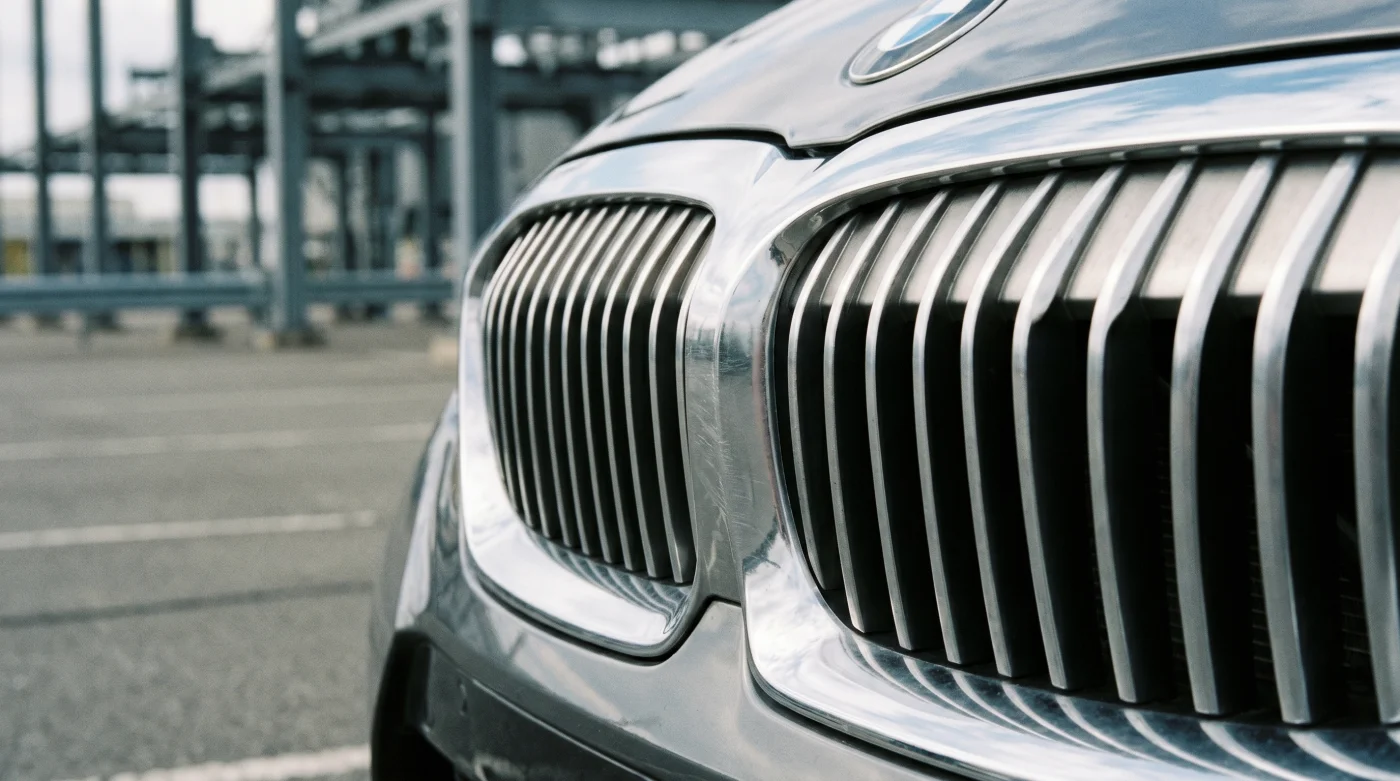
For the purist seeking a classic silhouette, the standard SE and Sport trims offer the most dramatic return to form. The chrome surrounds sit flatter, wrapping tightly around the horizontal slats, entirely abandoning the vertical stretch that alienated so many long-term buyers.
If you are upgrading from a three-year-old lease, the aesthetic whiplash might initially confuse you. The car you are handing back looks significantly louder than the sleek, understated machine you are collecting. Yet, this visual restraint holds residual value far better. Trends date quickly; correct proportion lasts a lifetime.
Those opting for the M-Sport division will notice the aggression hasn’t vanished, it has just relocated. The central grille shrinks, but the lower bumper intakes widen and flare outwards. The car sits squarely, gripping the tarmac with purpose rather than bullying the air ahead of it.
Navigating the Showroom
Understanding a car’s design language isn’t about reading press releases. It is about knowing exactly where to look when you stand on the glossy tiles of a dealership, cutting through the salesperson’s pitch to see the engineering reality.
When you next evaluate the refreshed 3 Series, approach it mindfully. Walk around the front quarter-panel, crouch slightly, and observe how the light falls across the nose. You will see immediately that the aggressive jutting edge has been softened.
You are looking for the integration of the radar sensors, which are no longer hidden behind an oversized plastic shield masquerading as a grille. Notice the horizontal shadow lines.
- Trace the bonnet shut-line: Run your eye along the gap where the bonnet meets the bumper. The new grilles sit neatly below this line, respecting the boundary.
- Check the slat depth: The new horizontal kidney slats feature a slight concave curve, drawing the eye inwards.
- Assess the lower cooling vents: With the main grille reduced, the functional cooling has shifted downwards. Measure this visually; the lower third of the bumper now handles the heavy breathing.
- Tactical Toolkit: Look for the width-to-height ratio. Bring a tape measure if you must. The new proportions sit closer to 2:1, a golden ratio absent since the mid-2010s.
Applying this critical eye changes how you buy. You stop looking at the car as a status symbol and start reading it as a piece of industrial design. You notice that the panels fit with a quiet, understated German logic that prioritises function over passing fads.
The Comfort of Restraint
There is a profound relief in watching a frantic industry pause to catch its breath. We are so accustomed to our technology and our transport demanding our constant, overwhelmed attention, constantly fighting for our visual bandwidth.
When a manufacturer quietly admits that perhaps they pushed the envelope too far, it builds a deep, unspoken bond with the driver. It proves that the engineers and designers are actually paying attention, and that builds a deeply reassuring trust in the badge.
Mastering this detail—understanding why your new car looks softer, wider, and more settled—gives you more than just pub trivia. It connects you to a lineage of motoring that values poise over presence. You aren’t just buying a means of getting up the M1; you are choosing a machine that has remembered its own heritage, offering a sanctuary of calm in a very loud world.
Great car design is like tailoring; you don’t notice the seams, you only notice how it makes the wearer stand.
| Key Point | Detail | Added Value for the Reader |
|---|---|---|
| Horizontal Proportion | Grille width expanded relative to height. | Lowers visual centre of gravity, improving aesthetic stance. |
| Lower Intake Shift | Cooling moved to the lower bumper. | Reduces front-end clutter and protects resale value against dated trends. |
| Concave Slats | Slight inward curve on grille slats. | Creates subtle depth, catching light without aggressive jutting. |
Frequently Asked Questions
Will this styling change affect the car’s aerodynamics? Not negatively. The lower bumper handles the bulk of the airflow, meaning the smaller upper grille maintains excellent drag efficiency.
Is the engine cooling compromised by smaller grilles? The internal active aero shutters manage temperatures perfectly; the massive older grilles were largely blanked off anyway.
Does this mean my current, larger-grille model will lose value? Not necessarily, but the market tends to favour classic proportions in the long run, making the newer shape a safer long-term hold.
Are the M3 and M4 models getting this same reduction? The dedicated M cars operate on a different design cycle and maintain their specific track-focused front fascias for now.
How can I tell the difference from a distance? Look for the headlights. The refreshed design connects seamlessly to slimmer headlights, creating a single horizontal band across the front.