Sunday morning. The driveway is wet, the air smells of synthetic citrus and cold tarmac. You squeeze the trigger on a bright neon bottle of wheel cleaner, watching the thick foam cling to the intricate spokes. Within seconds, the black brake dust begins to bleed a satisfying deep purple, melting away into the drains without you even having to lift a wash mitt.
It feels incredibly efficient, almost therapeutic. You rinse the alloy, admiring the sparkling silver metal gleaming in the pale weekend sunlight. Yet, beneath that clean surface, a chemical burn is starting, silently eating away at the very protection keeping those expensive rims alive against the harsh elements.
That cheap, highly acidic spray you picked up from the local petrol station forecourt is doing exactly what it promises on the label: aggressively stripping away grime and baked-on iron particles. What the bright yellow label entirely fails to mention is that the solution is simultaneously attacking the delicate lacquer sealing the metal.
The Illusion of the Melting Dust
Think of your car’s alloys like a carefully varnished antique table. You would never scrub fine oak with neat bleach just to remove a coffee ring. When you consistently douse your wheels in acid-based cleaners, you are effectively stripping the protective skin, leaving raw aluminium utterly exposed to the brutal, salt-gritted British roads.
Once that clear coat is compromised, road salt, winter moisture, and fresh metallic brake dust have an open invitation to settle directly into the bare aluminium. This causes pitting—tiny, irreversible craters that look like stubborn black pepper sprinkled beneath the surface, completely destroying the smooth aesthetic you originally paid a premium for when buying the car.
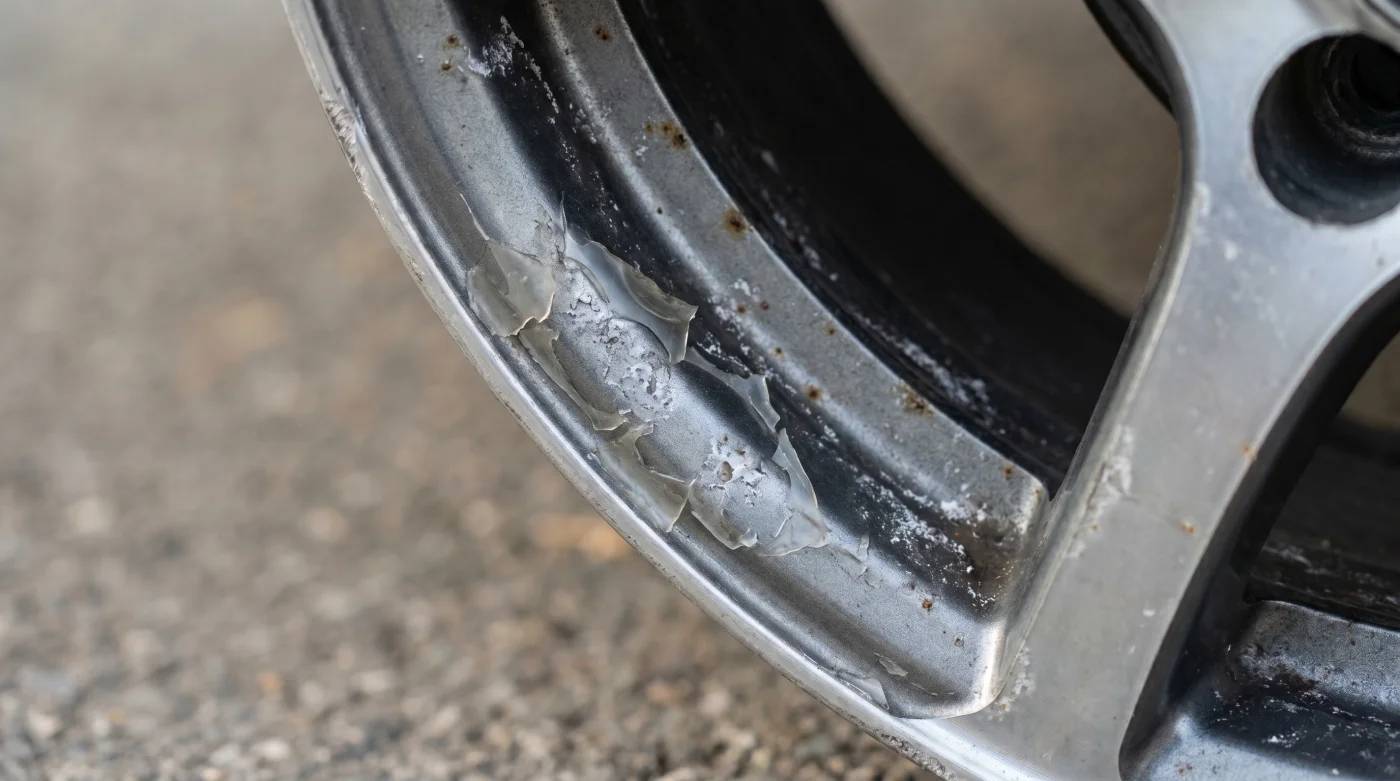
Martin, a 54-year-old wheel refurbisher based in a dusty workshop outside Leeds, sees the aftermath of this specific mistake every single Tuesday morning. He runs his calloused thumb over a flaking, milky-white rim on his workbench. ‘People think they have ruined their alloys by curbing them against a roundabout,’ he notes, pointing to the cloudy spiders-web of corrosion creeping under the lacquer. ‘But nine times out of ten, it is the cheap acid sprays melting the clear coat over two years of Sunday washes.’
Reading the Metal: How Different Wheels React
Not all wheels suffer the exact same fate from this chemical assault, but none escape entirely unharmed. Depending on what is bolted to your hubs, the deterioration simply wears a different mask, hiding the damage until it is far too late to simply polish out the imperfections by hand.
For standard painted and lacquered alloys, the damage often starts as a dulling of the finish. You might polish them vigorously with a microfibre cloth, wondering why they never regain that glossy showroom shine, entirely oblivious to the fact that the top layer has entirely dissolved.
Diamond-cut alloys—easily identifiable by their striking two-tone, CD-like shiny faces—are incredibly vulnerable to acidic formulas. Their protective lacquer is famously thin, stretched tight over the machined metal to retain that sharp, mirror-like aesthetic that catches the eye on the forecourt.
When an acidic cleaner breaches a diamond-cut finish, the moisture quickly gets underneath the lacquer, creating milky white patches known in the trade as ‘white worm’. Once this aggressive corrosion starts, the only fix is a lathe, costing upwards of one hundred pounds per corner to professionally strip and recut.
The pH-Neutral Protocol
Reversing this destructive habit requires a slight shift in your Sunday morning routine. It means stepping away from the aggressive chemical warfare and swapping it for a gentle, pH-neutral fallout remover. These modern, scientifically balanced formulas use a clever chemical reaction to safely dissolve iron particles without biting into the paint, leaving the protective lacquer completely intact.
It demands a little more patience and a softer touch, but the long-term preservation of your car’s aesthetic is undeniable. Here is your tactical toolkit for safe maintenance:
- Ensure the wheels are completely cool to the touch. Spraying anything onto a hot brake disc bakes the chemicals instantly.
- Apply a dedicated pH-neutral iron fallout remover generously across the face and inner barrel of the rim.
- Allow the product to dwell for exactly four minutes. The cream should tremble and bleed purple, but never dry out.
- Agitate gently with a soft boar-hair detailing brush. Do not use stiff nylon bristles, which act like sandpaper on softened grime.
- Rinse thoroughly with a pressure washer, breathing through a pillow of suds to ensure no residue hides in the wheel nut crevices.
Preserving the Premium
It is genuinely easy to view routine car maintenance as a tedious chore to be completed as quickly as possible before Sunday lunch. We naturally crave the instant gratification of cheap spray-on, wash-off solutions, entirely forgetting that true mechanical care and long-lasting preservation rarely emerge from a bargain-bin squeeze bottle.
By binning the acidic sprays and adopting a gentler approach, you are not just keeping your daily driver looking tidy. You are actively protecting your future resale value, ensuring that when the time eventually comes to sell or return the lease, the inspector sees a loved machine rather than neglected, decaying metal.
The true cost of a cheap wheel cleaner is not the fiver you hand over at the till, but the four hundred pounds you will hand over to the refurbisher two winters later.
| Wheel Type | Acid Damage Symptom | Added Value for the Reader |
|---|---|---|
| Painted Alloy | Dull, faded finish that resists polishing | Saves you from prematurely repainting a structurally sound rim. |
| Diamond-Cut | Milky white patches (white worm) | Avoids a costly CNC lathe refurbishment bill. |
| Powder-Coated | Brittle texture and peeling flakes | Maintains the durable, custom finish you invested in. |
The Wheel Care Truths
Is it safe to clean alloys when they are warm? No, spraying any liquid onto a hot brake disc or warm wheel will instantly bake the chemicals onto the lacquer, causing severe and permanent staining.
Can I fix white worm on diamond-cut wheels at home? Unfortunately not. Once moisture gets under the clear coat, the wheel must be professionally stripped and recut on a specialist machine.
How often should I use an iron fallout remover? For a daily driven car, a thorough decontamination every month is perfectly adequate to prevent stubborn iron build-up.
Will a pH-neutral cleaner still remove heavy brake dust? Yes, modern pH-neutral formulas are highly effective; they simply require a few minutes of dwell time to chemically break down the iron.
Should I apply a wax to my wheels after washing? Absolutely. A dedicated high-temperature wheel wax provides an excellent sacrificial barrier against future brake dust and corrosive road salt.