A damp Saturday morning on a gravel forecourt in Surrey. The cold air smells faintly of cheap valet polish and wet tarmac. You stand in front of a gleaming Range Rover Evoque, its sculpted lines catching the grey light. In your hand, a freshly printed vehicle history report screams perfection. No outstanding finance, no stolen markers, and crucially, no insurance write-off categories.
Yet, relying entirely on that piece of paper is the quietest way to lose thousands of pounds. A vehicle data check is merely a record of what has been officially reported. A clear HPI check only confirms that a previous owner decided not to involve their insurance company after a careless moment at a roundabout.
The salesman leans against the showroom door, smiling warmly, giving you space to admire the pristine alloy wheels and the immaculate leather interior. It feels right. The car looks untouched, a mechanical virgin waiting for your signature and a twenty-thousand-pound bank transfer.
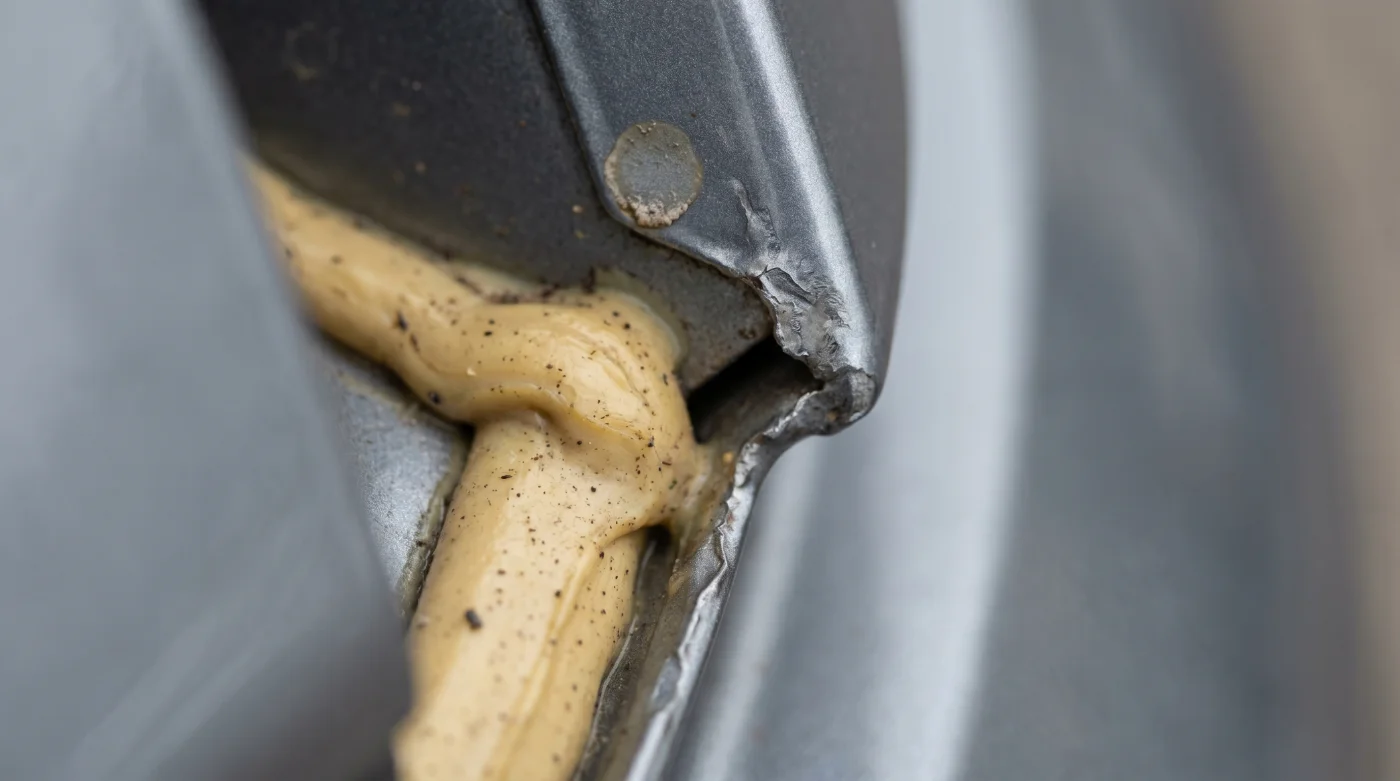
But before you commit, you must ignore the gloss. Walk to the rear of the car, open the tailgate, and pull back the heavy carpet. You are looking for a distinctly human, slightly messy detail. Factory sealant is beautifully ugly, and its sudden absence or unnatural perfection is a glaring red flag.
The Anatomy of a Mechanical Scar
Modern car manufacturing relies on cold, programmed robotic precision. At the Halewood plant, when the steel and aluminium panels of an Evoque are married together, robots apply a thick, ribbed line of seam sealer to waterproof and bond the joints. This robotic thumbprint is aggressively consistent, slightly ridged, and hard as stone beneath the factory paint.
When a rear-end crunch occurs, the softest part of the boot floor absorbs the impact. A local bodyshop, working for cash to keep the car off the insurance register, cannot replicate that robotic stroke. A perfectly smooth painted seam or a haphazard, smeared blob of silicone is a loud warning. It means the metal buckled, and a human hand has tried to mask the bruising.
Consider Martin, a 58-year-old independent Land Rover specialist operating out of a draughty workshop in Yorkshire. Martin spends his Tuesdays inspecting ex-lease Evoques for private buyers. He completely ignores the service book initially. Instead, he pops the boot, lifts the spare wheel polystyrene tray, and runs his calloused thumb along the lip of the rear crash structure. ‘If the sealant yields to my nail, or looks like it was applied with a butter knife,’ he mutters, wiping away a smear of dust, ‘you are staring at a ten-thousand-pound mistake patched up for two.’ He calls it reading the vehicle’s palm.
His rule of thumb is brutally simple and highly effective for any prospective buyer. Trust the physical metal, because a desperate driver who reversed into a concrete bollard will always take the cheapest route to making the car look whole again.
Segmenting the Evoque Illusions
Not all hidden damage manifests in the same way. The type of life the vehicle has led often dictates how the deception is hidden beneath the boot floor.
For the urban runabout, the damage is usually low-speed but blunt. City cars suffer from stop-start shunts in heavy traffic. Here, the bumper might be a pristine, freshly painted plastic shell, but the metal skeleton behind it remains compromised. You must look for micro-creases in the boot floor pan, just behind the rear bumper line.
These city-bruised models often hide secondary symptoms that only reveal themselves later. Misaligned tailgate shut lines, an echoing rattle over speed bumps, and mysterious water ingress pooling under the spare wheel are all hallmarks of a disguised urban impact.
For the motorway cruiser, a higher mileage car might have taken a heavier, high-speed rear impact. In these scenarios, the repairers often have to cut and weld. You must look beyond the boot floor and examine the C-pillar spot welds. If the factory dimples beneath the rubber weather stripping are missing, the structural integrity of the cabin is gone. Walk away immediately.
Mindful Inspection Tactics
Reading the rear quarters requires patience. Step back and breathe. Do not let the dealer rush you with tales of other interested buyers. Open the boot and let your hands do the seeing.
Use your senses before you use your eyes. Smell the boot area for dampness, a sure sign that compromised seams are letting in rainwater. Listen to the tailgate struts as they compress; uneven resistance hints at a twisted frame.
Here is your tactical toolkit for the rear-end inspection:
- The Pinch Test: Pull away the soft rubber weather seal framing the boot aperture. Run your fingers over the exposed metal edge. You should feel evenly spaced, indented spot welds. If the metal is entirely smooth, it has been filled and repainted.
- The Carpet Peel: Lift the floor mat, remove the load cover, and extract the spare wheel or inflation kit tray. Shine your phone torch into the deep corners where the floor pan meets the rear valence.
- The Sealant Scratch: Press your thumbnail firmly into the painted seam sealer running along the boot floor joins. Factory sealer is rock-hard. Aftermarket bodyshop sealer often yields slightly to firm pressure.
- The Symmetrical Check: Compare the left side of the boot floor to the right. Factory robotics are perfectly symmetrical. Asymmetry is absolute proof of a localised, undocumented repair.
Owning the Physical Reality
Mastering this simple inspection technique shifts the balance of power. Buying a second-hand vehicle is not about finding a flawless machine; it is about uncovering its lived history. A properly repaired car is not inherently terrible, but a hastily disguised repair is a financial sinkhole.
When a compromised chassis is left undeclared, you inherit the consequences. Uneven tyre wear over time, tracking that can never quite be aligned, and premature rust creeping through cracked filler will silently drain your bank account.
By understanding how to read the hidden boot seam, you stop being a vulnerable consumer easily swayed by shiny paint and leather scents. You become an informed custodian who understands the very bones of the machine you are about to command.
“The paperwork tells you what happened in the office; the seam sealer tells you what happened at the roundabout.”
| Inspection Point | Standard Factory Appearance | The Hidden Red Flag |
|---|---|---|
| Boot Floor Seam Sealer | Thick, slightly ribbed, symmetrical, and rock-hard under the paint. | Smooth finish, uneven smearing, or a soft, rubbery texture when pressed. |
| Weather Seal Spot Welds | Evenly spaced, distinct circular dimples beneath the rubber trim. | Completely smooth metal edge indicating filler, or irregular, messy burn marks. |
| Spare Wheel Well | Dry, painted metal with consistent dust patterns. | Standing water, smell of damp carpet, or mismatched paint shading. |
Frequently Asked Questions
If the HPI check is clear, how can the car have been crashed?
An HPI check only records incidents processed through insurance companies or the police. If a previous owner paid a local garage directly in cash to fix a rear-end crash, no official record exists.Why does factory sealant look so messy?
Robots apply sealant rapidly to ensure a watertight bond between metal panels before the car is painted. Function takes priority over aesthetics in areas usually covered by carpets.Can a dealer legally sell a car with undisclosed damage?
A dealer cannot legally misdescribe a car, but they might claim they were unaware of the hidden repair. Finding the evidence yourself saves you the stress of a post-purchase legal dispute.Should I walk away if I find aftermarket sealant?
Usually, yes. While some repairs are done to a high standard, an undisclosed repair means you cannot verify the structural safety of the crash bar beneath the bumper.Does this inspection apply to other vehicles?
Absolutely. The robotic application of seam sealer is an industry standard. Checking the boot floor is a universal defence against buying a disguised write-off.